Foundation Settlement and Piering in Bothell

Typical cost in Bothell

  • Per pier$1,800 – $3,500+
  • One corner of the house, 3 to 4 piers$5,500 – $14,000+
  • One side of the house, 6 to 8 piers$11,000 – $28,000+
  • Whole house, 10 to 14 piers$18,000 – $49,000+

Bothell Foundation Repair treats floors that roll, doors that gap and cracks at window corners as possible signs that a footing has dropped. Push piers, helical piers and underpinning are explained below, with what each is meant to do and where each stops.

Age explains less in Bothell than the lot does: the median house dates from 1992 and only about 39 percent were built in 2000 or later, so the ground under a particular footing matters more. Mountlake Terrace and Lynnwood are covered too.

Request a free quote
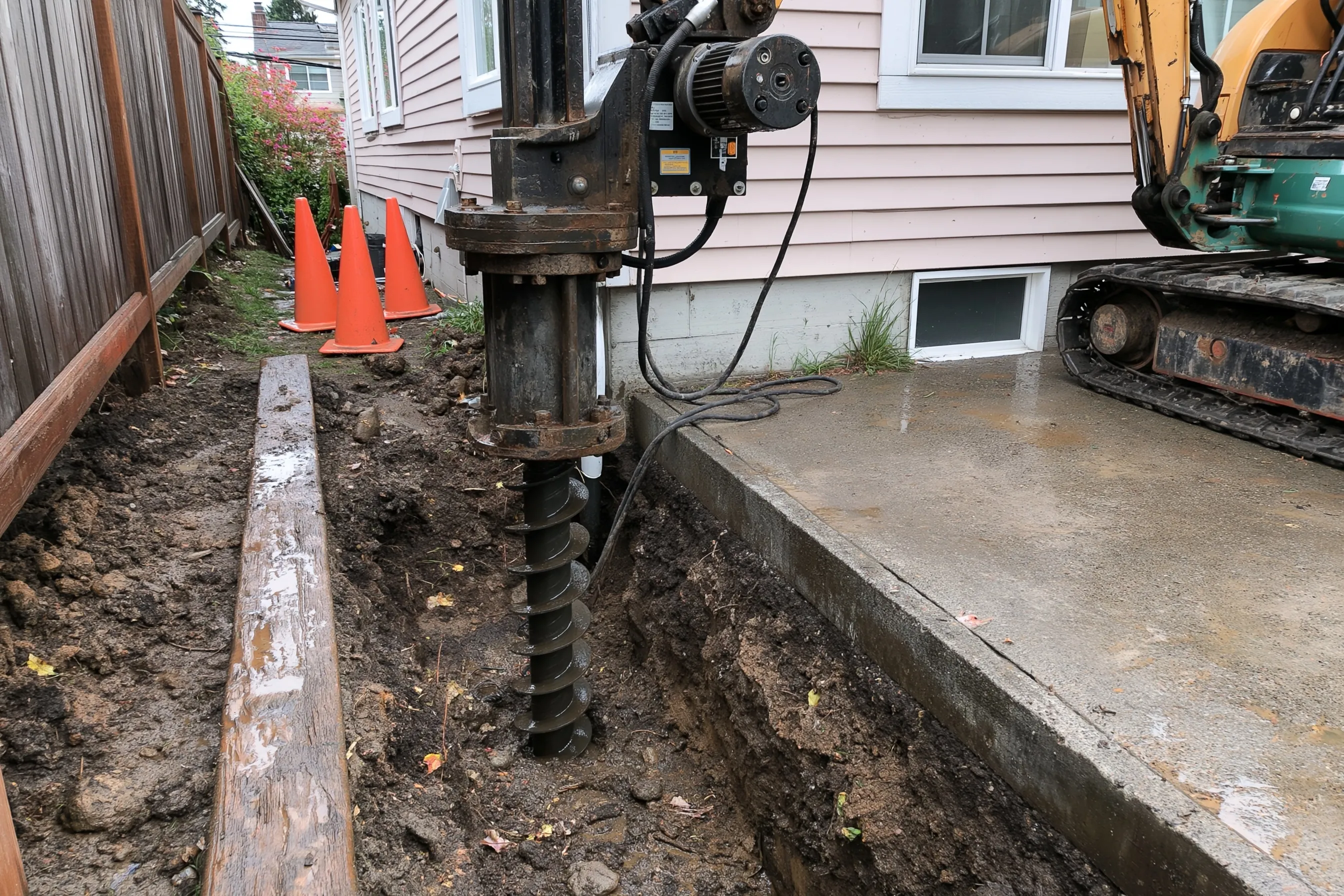
Hydraulic drive head and torque motor on a compact excavator beside a house foundation, a steel helical shaft being turned into a trench dug beside the footing

Push piers, helical piers and underpinning

Push piers

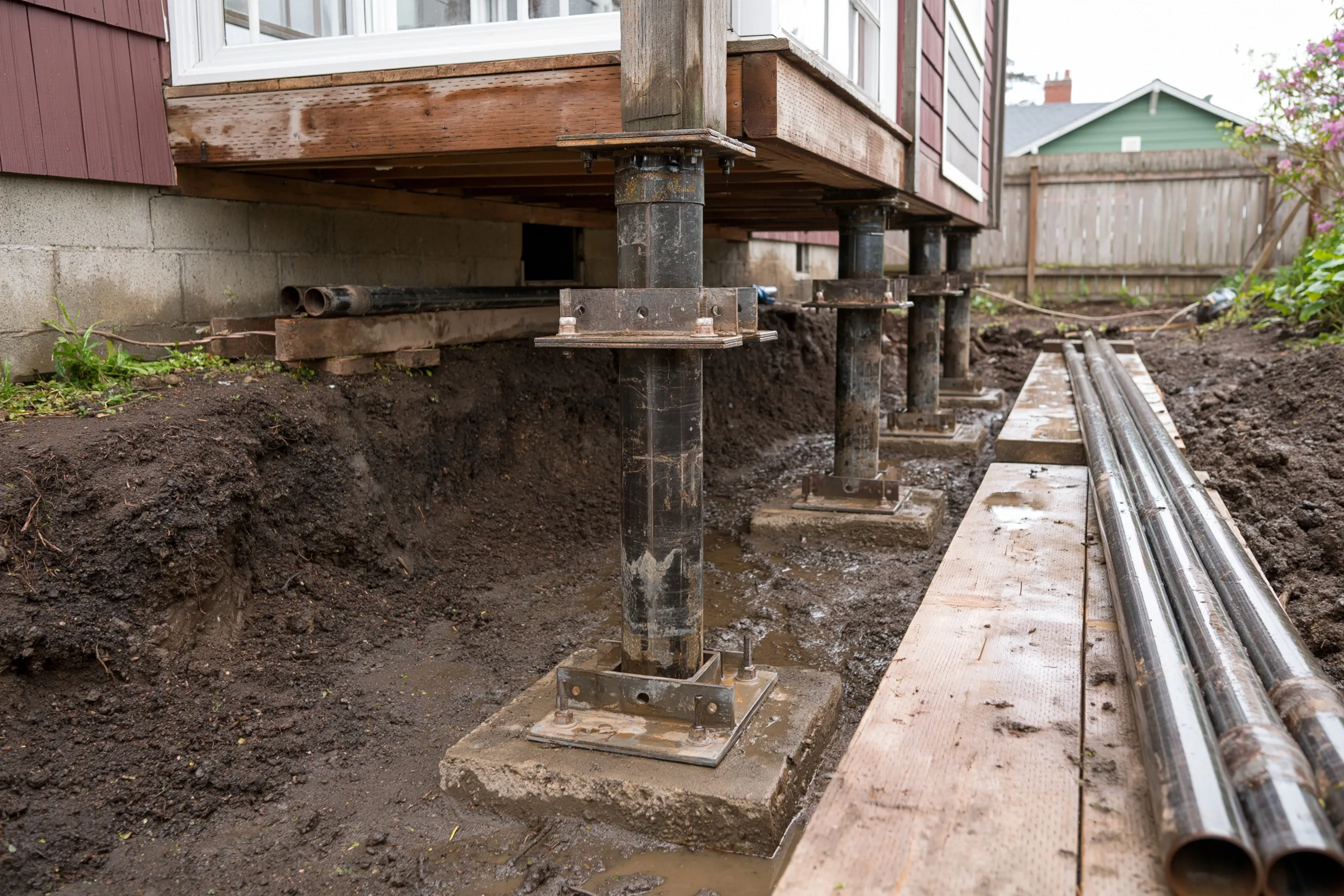
Push piers are what contractors call HUD’s mini-piers: steel pipe of 2 to 8 inches across, usually driven hydraulically in sections beside the footing until it reaches rock or firm ground. HUD lists a drawback, which is that used incorrectly they can crack the foundation and slab.

Helical piers

HUD names limited-capacity soils as the thing that defeats helical piers, a steel shaft ending in a helical plate that is rotated into stable soil and bracketed to the footing. Installation torque shows the bearing capacity reached.

Underpinning with a larger footing

The third route is to excavate under the settled wall and widen the footing there. HUD says an engineer should design it, and describes the job as one for experts. The new footing has to be sized and reinforced for the soil already there.

Signs a house is settling

  • Floors that slope toward one corner
  • Gaps at the top of a door frame or around a window
  • Cracks that taper, or run diagonally from the corner of a window or door
  • A porch, bay window or addition pulling away from the house

HUD says settlement usually happens over time. Pencil a dated mark at each end of a crack and look again in a few weeks.

Why houses settle in Puget Sound

Soil comes second on HUD’s list of causes of foundation failure after problematic sites: organic or silty soils and poorly compacted fill are its examples. Seismic activity, moving water and poor design or materials complete the list.

The state Department of Natural Resources says peat, which settles heavily under load and drying, is found in 28 of the state’s 39 counties, the majority of it in the Puget Sound basin. What the soil under your own footing is like is a question for a soils check, and water at the footing, covered on the foundation drainage page, is part of it.

What piers are meant to do

A pier’s purpose is to carry the footing on firmer ground and to help halt further movement. Returning a house to level is not promised, and HUD’s list of disadvantages for each method is the reason. Water, fill or soft soil behind the settlement must be dealt with as well, or the settlement may continue.

What changes the cost

These factors move a price, and the written estimate comes after the foundation has been seen:

  • How many piers the footing needs, which depends on the load and the span
  • Depth to firm ground
  • Whether the settled part is a corner, a side or the whole house
  • Access for equipment, particularly on a slope or beside a deck
  • Engineer design and permits
  • Interior and exterior finish repair afterward

What Bothell lots and rules add

Bothell’s critical areas code includes, among seismic hazard areas, settlement and liquefaction conditions in areas underlain by cohesionless, loose or soft-saturated soils of low density, typically with a shallow groundwater table. It also lets the city director designate other areas as susceptible to events including differential settlement. Both are phrases about the ground your footing sits on.

Washington’s Department of Natural Resources maps relative liquefaction susceptibility from very low to high in its Geologic Information Portal, and says the data is a general guide and not site-specific. We confirm with the city before pier work is priced.

Steel bracket and push pier pipe sections set under a concrete footing in a dug-out pit beside a house foundation, with lengths of pipe on a plank

Questions and answers

Can you lift my house back to level?

We do not promise it. Piers aim to help stop movement. Raising a settled house is a separate matter that the engineer and the soil conditions would decide, and HUD notes that mini-piers can crack a foundation if used incorrectly.

How do I know if I need push piers or helical piers?

Neither is better by default. Push piers want firm ground at a depth they can reach, helical piers do not suit soil with limited bearing capacity, and a geotechnical look at the lot is what decides.

Is my crack settlement?

It might be. A crack that tapers or that appears together with a sloping floor or gapped door is a sign worth measuring. See our page on foundation crack repair for how cracks are read.

Footing support and crack sealing are not the same job. Sealing is described on the foundation crack repair page, while the Bothell Foundation Repair home page lists all services.

Request a free foundation repair quote

Describe the signs: which floors slope, which doors gap, where cracks are and how old the house is. Say whether any part is an addition or a porch, and whether there is a slope or a drainage problem close by. We'll get back to you soon with an estimate or any questions we have. Estimates are free and there's no obligation.

Call (425) 491-5234

Call (425) 491-5234